
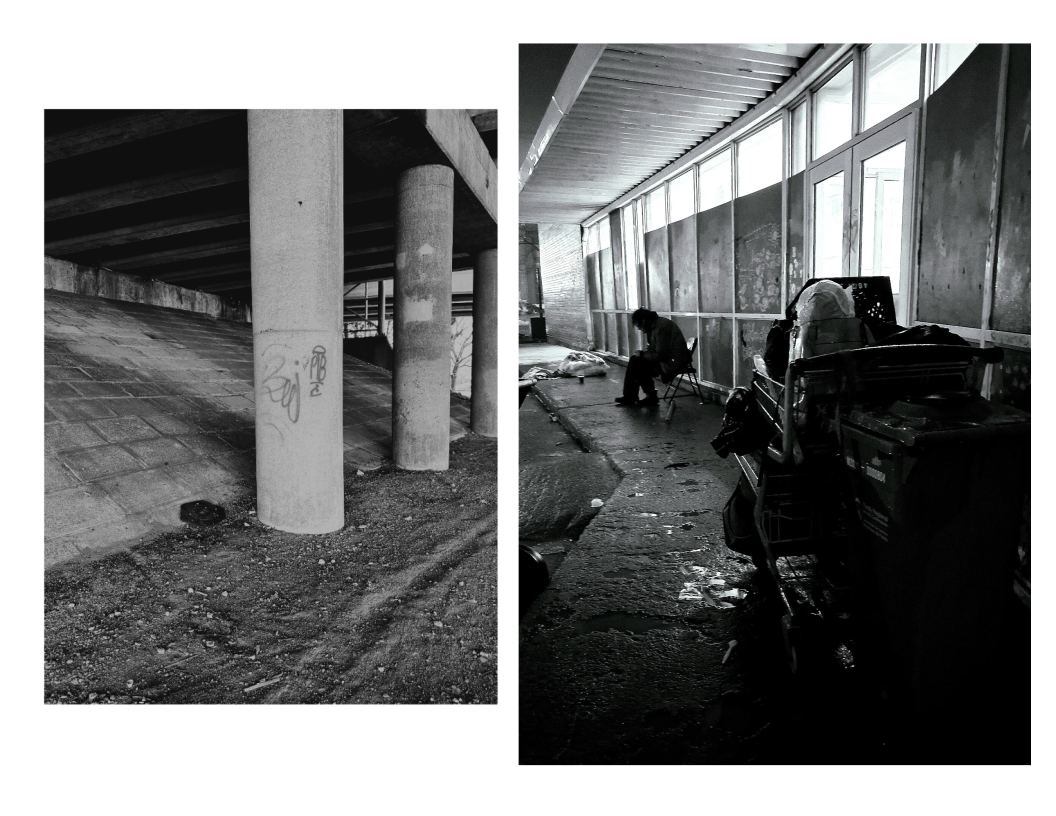
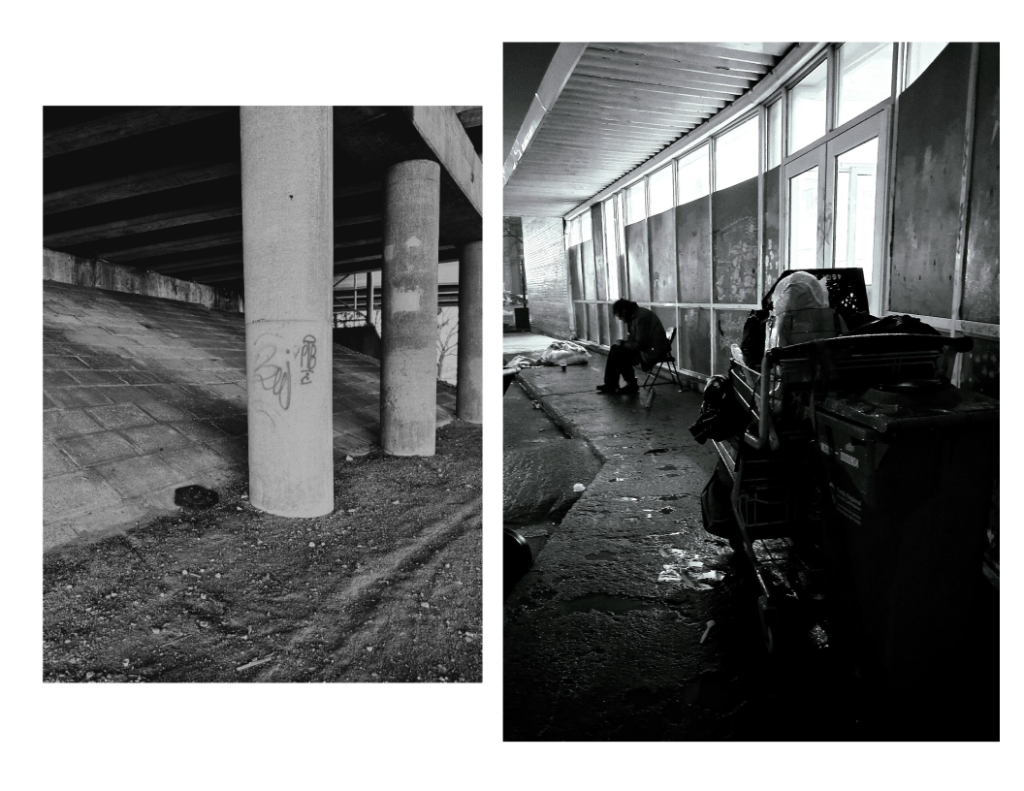
The City of Saint John and its residents were financially struggling well before the housing crisis arrived in New Brunswick. Coupled with the wider cost-of-living crisis, this had the effect of tipping many Saint Johners already on the edge of economic abyss into homelessness. The response by our municipality has been inadequate, going to great lengths to punish those who are facing the burnt of bad housing policies, in a misguided attempt to render the unhoused in this city invisible. All the while using the language of care and compassion. The city has failed on two fronts – by failing to address the underlying material reality of unaffordable housing and by treating unhoused people with hostility.
The city council will only exacerbate the existing problem by denying the unhoused a basic degree of care and dignity through its red zoning and private policing policies. Red zoning seeks to concentrate homelessness in only a select few areas, a strategy widely condemned by advocates and experts as ineffective and inhumane. In an attempt to police our way out, Saint John is currently spending an exorbitant sum on private security firm Gardaworld, to patrol “at-risk” neighbourhoods, a wasteful strategy that largely serves as security theatre, while also opening the door for an expansion in private policing in the future.
The Scale of the Problem
Numbers on homelessness are hard to come by. Conveniently, cities don’t keep track of this. What we have comes from front line agencies. However, examining homelessness alone only partly captures the scale of the problem of poverty and economic precarity in the city. Almost every measure related to poverty in NB indicates that rates of homelessness and poverty in SJ are rising.
In terms of homelessness:
- Pre-pandemic indicators were already poor, with a consistent rise in the number of people using emergency shelters in SJ from 200 in 2014 to 417 in 2018, a disproportionate number of whom were youths and/or indigenous.
- Homelessness in NB rose from around 493 in 2021 to over 1521 in March 2025, a 210% increase.
- 39 people died in the city 2025 due to homelessness related reasons.
In terms of poverty in general:
- The percentage of employed people using food banks has rose 7% from 2019 to 2025.
- NB is the poorest province in Canada (a distinction sometimes shared with Nova Scotia), not just by GDP per capita, but also by the percentage of low-income earners, with 16.7% deemed “low-income”, and 45% of New Brunswickers earning less than a living wage.
- Access to primary healthcare providers has declined from 93% in 2017 to 79% in 2023. The rate of reported unmet healthcare needs has increased from 6% in 2019 to 11% in 2023.
- The amount of affordable housing dropped 25% from 2016 to 2021, a trend that is only accelerating. The price of houses has doubled in the past five years. In the same period, NB has experienced the sharpest rent increases in Canada due to some of the weakest tenant protections. Further, there has been constant defunding of public housing.
- The cost of living in NB has outpaced real wage growth post-pandemic.
- The rate of overdoses in NB has increased 160% in five years.
Red Zones
The City’s solution to its homelessness crisis was to establish a “red zone strategy”, in which unhoused people are not allowed to live in any location deemed a red zone. These red zones encompass the majority of available space in the city. The central aim of this initiative appears to be pushing visible homelessness away from the public eye and towards the so-called yellow and green zones. However, the designation of yellow zones hasn’t been well defined, and green zones are being administered by private non-profits which comes with other barriers for the unhoused. It has never been clear where a person in an encampment is supposed to go after their only shelter has been razed to the ground. This has had the added effect of moving the unhoused further away from essential services.
Described euphemistically as part of a “Housing For All” strategy, the red zone plan does not meaningfully address the root cause of the problem, which is housing. The transitional housing projects that do exist are insufficient to address the scale of the problem, nor could they ever address the wider strain felt by all residents struggling under an increasingly costly, heavily commodified housing market. The city is attempting, unsuccessfully, to address the symptoms rather than the disease.
Private Police
The city’s other optics-oriented attempt to be seen “doing something” in response to petty crime, and to appease the uptown business lobby involves a shift towards privatized policing, borrowing from Fredericton’s playbook. The City is paying nearly $800,000 a year to the private security firm Gardaworld (a company with a $1 billion contract to administer ICE detention centres in the U.S.) to have two security guards patrolling Waterloo Village in an ‘observational’ capacity. They are not empowered to enforce the law, rendering them roughly as useful at stopping crime as any person capable of observing it. However, the trend towards private policing is disturbing and could escalate if, say, the City were to prematurely claim success based on scant anecdotal evidence. More than anything, this initiative is an egregious waste of resources that could be dedicated to housing people and providing essential services, serving only to normalize the criminalization of homelessness with little obvious benefit.