
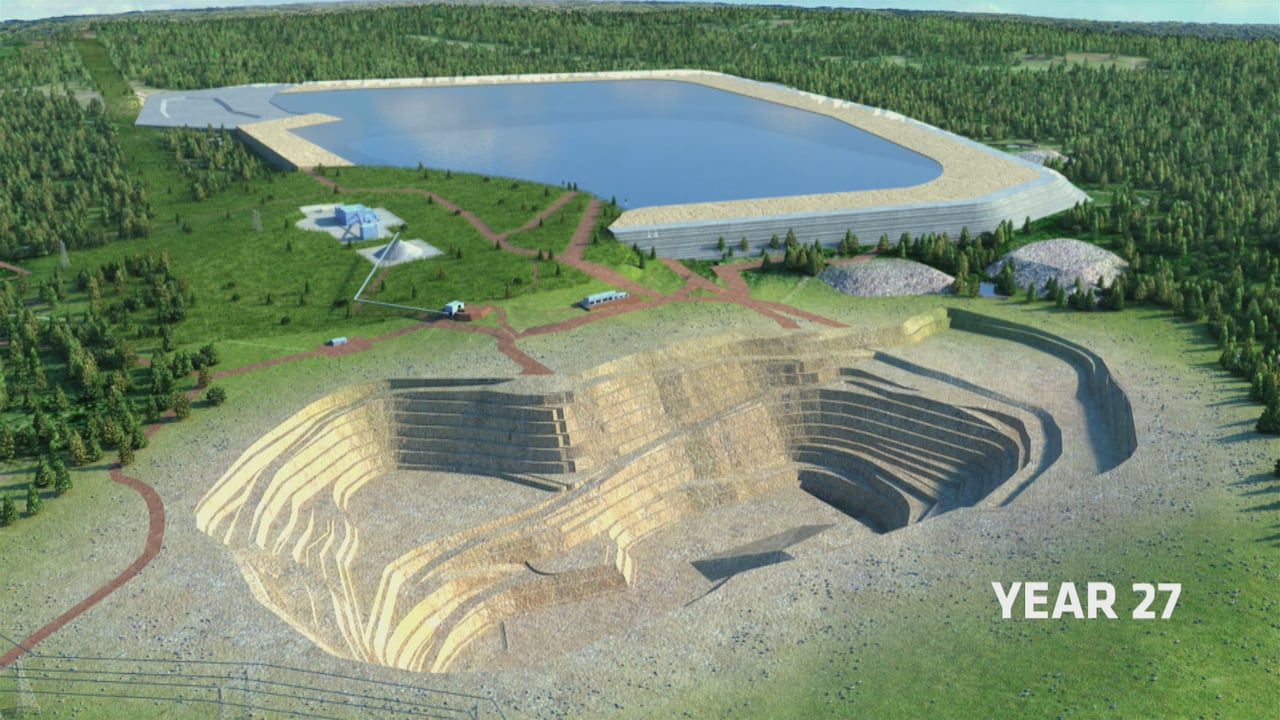
The Sisson Mine is a proposed large open-pit tungsten and molybdenum mine planned for the upper Nashwaak–Wolastoq (Saint John River) watershed, northwest of Fredericton. New Brunswickers rely on this water for drinking, fishing, recreation, and cultural use.
While the project is marketed as a short-term economic opportunity, evidence shows it would leave New Brunswickers with long-term environmental harm and potential health effects that last long after mining ends.
Responsible development must protect water, forests, public health and taxpayers, and not pass the risk from private companies to the public.
The concerns
Stream & Fish Habitat
The mine would permanently alter more than 1,200 hectares of forest, wetlands and headwater streams. Construction would mean loss of brooks and tributaries, destruction of fish habitat and altered downstream water flows.
Tailings Ponds
The largest part of the project is not the pit, it’s the waste. The mine would store millions of tonnes of wet mining waste behind large earth dams. These tailings facilities must be monitored forever, can leak slowly over time and can fail during extreme weather, putting drinking water at risk.
Canada has one of the worst records for tailings failures, including Mount Polley, B.C. and Mount Pleasant, N.B., where heavy rainfall in 1998 caused a tailings dam failure.
Air Pollution & Climate Pressure
Open-pit mining creates significant air pollution, including fine dust, metal-containing particles, diesel exhaust, Nitrogen oxides, sulphur dioxide, hydrogen sulphide and ammonia. The mine would also produce long-term greenhouse gas emissions. Over the project’s estimated operating life, the mine would generate about 1.31 million tonnes of emissions – around 280,000 ‘car-years’.
Exposure to these pollutants increases the risk of lung and heart disease. Children, seniors and people with existing health conditions are most vulnerable. These health risks could last for generations.
Water Contamination
Hard-rock metal mining can release arsenic and other toxic heavy metals, acid drainage that spreads contamination and dissolved salts and processing residues. These can enter rivers and private wells and move downstream. Long-term exposure is linked to issues in children development, impacts on memory, learning and other long-term health issues.
These pollutants can last for decades, travel through surface and groundwater and build up in sediments and fish. That means health risks and health care costs can continue for decades,
The mine is expected to run for 27 years, but even if it closes early, here’s what remains:
- The open pit: About 145 hectares (about 200 soccer fields) and 370 metres deep (deeper than the CN Tower’s lookout level).
- Tailings storage facility: About 751–785 hectares (about 1,400–1,500 soccer fields; larger than many New Brunswick towns).
- Tailings dam: About eight kilometres long and 90 metres high (almost 16 times the length and twice the height of the Mactaquac Dam).
- Total industrial footprint: About 1,253 hectares (12.5 km², about the same size as Fredericton.
- Long term damage and public costs.
Economic concerns
- The Sisson Mine is controlled by Northcliff Resources, a company majority-owned by the Todd Corporation of New Zealand. Northcliff has also received $20 million from the U.S. department of war to accelerate the Sisson project. That means much of the revenue would leave NB, corporate decisions are made outside the province, while the environmental and financial risks stay here.
- The mine is projected to operate for about 27 years. But mining projects often close early due to falling metal prices, rising operating costs, or corporate restructuring or bankruptcy. NB has seen this before. The Mount Pleasant tungsten mine closed after only two years of production. When mines close early, communities are left with job losses, industrial waste, and long-term cleanup costs amounting to millions of dollars. NB taxpayers are already on the hook for the cleanup of over 1,000 former industrial sites, including abandoned mines.
- Mining waste produces contaminated water that must be treated before it can be released into rivers and streams. Treatment systems are expensive to build and operate, often run for decades after mines close and may need to operate indefinitely. A review of water treatment for the mine projected major long-term costs. In NB, the Mount Pleasant mine still requires water treatment more than 40 years after it shut down.
- Large mining projects depend on public infrastructure – roads and bridges capable of supporting heavy industrial traffic, transmission lines and power connections and long-term maintenance of rural transportation routes. Heavy mining trucks and equipment cause significant wear on roads and bridges. Much of this cost is often carried by taxpayers, not the mining companies.
- A detailed analysis of three major coal mines in northeastern B.C. found that companies consistently overstated economic benefits, delivered fewer jobs than promised, and paid far less in taxes than projected.
Coalition to Stop Sisson mine
The Coalition Against the Sisson Mine is made up of organizations and individuals who oppose the proposed Sisson tungsten and molybdenum mine in the Nashwaak watershed on stolen Wolastoqiyik homeland. We are united in our work to safeguard the river, the surrounding ecosystems, and local community from the harms posed by the mine and tailings dam, and in upholding the right for free, prior, and informed consent from the Wolastoq Grand Council.
The Coalition exists to share information, coordinate efforts where helpful, and strengthen collective action to protect the Nashwaak River watershed from the risks posed by the proposed Sisson mine.
Contact: stopsissonmine@conservationcouncil.ca
What can you do?
- Help organize an information session in your community or work place.
- Write to government officials, asking them to oppose this shortsighted project (see the conversation council website for a template).
- Stay informed about our work, join the coalition and get involved directly.