
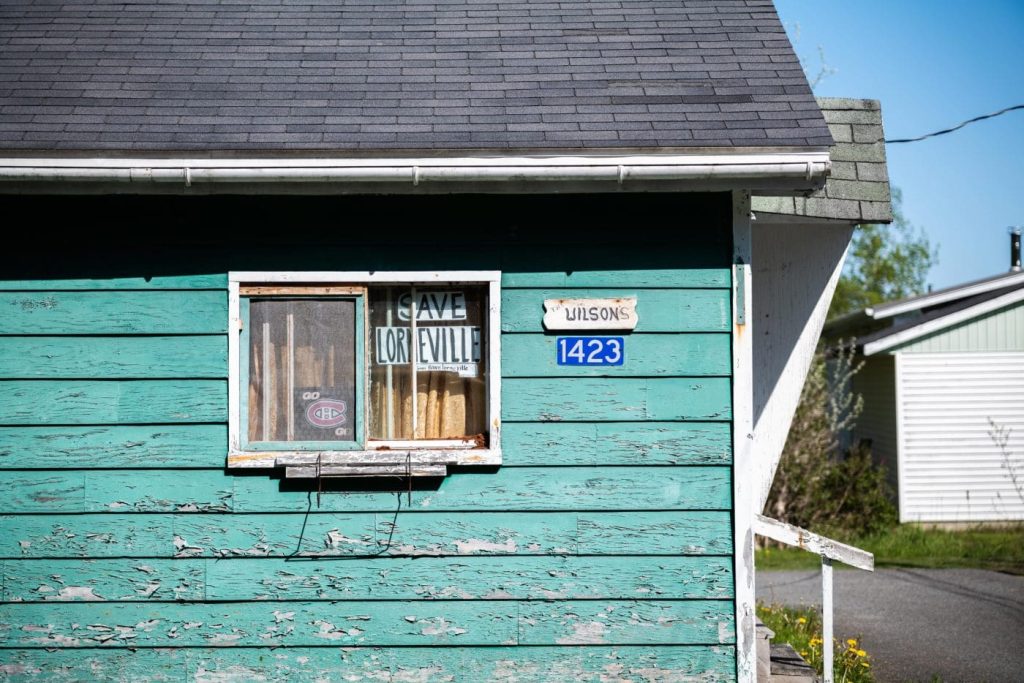
In June 2025, the city of Saint John announced its plans to expand the Spruce Lake Industrial park by 400 acres, while also re-zoning the park to “Heavy Industrial” from its current “Light Industrial” zoning. All this came after a sham public hearing. The expanded area is to be clear cut and used to grow the city’s industrial capacity. Located to the west of the city, the industrial park is adjacent to biodiverse salt marshes and old growth forests, the city’s water supply, and the community of Lorneville, home to 200 residents. While council was tight-lipped about the land-use plans during the rezoning, speculations that Lorneville would soon be home to a data centre have since been confirmed. While the city has claimed the plan has the approval of local indigenous communities, Wolastoqi leaders say they have not been consulted on the project.
The implications of this development are far-reaching, from the destruction of local forest and wetlands, increased power usage, to negative societal impacts such as lower quality of life for local residents, and more globally to the aiding and abetting of the war and mass surveillance.
What is at stake?
Environmental Impacts
The most obvious impacts from this project are environmental, beginning with the clearing of hundreds of hectares of old-growth forest and destruction of sensitive and vital wetlands. The province’s environmental assessment performed by Dillon Consulting concluded that “neither the affected forest nor wetlands are significant” – a clear example of the complete moral bankruptcy of such paid consultants.
Subsequent investigations argue differently. For example, a 403-year-old tree, one of the oldest in the province, along with others more than two centuries old are set to be cut down. Others, such as ACAP Saint John have pointed to the problems with infilling hectares of wetlands, saltmarshes, peat bogs that play various roles in the local ecosystem, including absorbing rainwater which plays a vital role in reducing the likelihood of flooding. Additionally, any spillage or leakage from future heavy industry located in the park could poison the groundwater systems, leading eventually to the Wolastoq and its tributaries.
While there are many reasons to protest the expansion, the already green-lit data centre project brings along its own environmental issues. Many Data Centres projects have been shut down or discontinued after public objection. The planned Lorneville data centre is expected to use 390MW of energy per year, at least half of which is supposed to come from the controversial in-the-works Tantramar Gas plant. The other half is to be generated on-site, which will result in further emissions locally. While water-use estimates for the plant have not been released, a UN report found that AI data centres used 4.5 Trillion Gallons of water in 2025, enough to meet the water needs of hundreds of millions of people. Data centres also produce a variety of emissions, including carbon dioxide, constant noise (a loud humming), and heat.
Social Impacts
One of the main arguments used to sell the expansion is the supposed economic impacts that will help to grow the local economy and bring social development to the region. This story is not new to SJ, a city built and still reliant upon heavy industry, supposed bringer of economic growth, a city with above-average poverty and child poverty rates, that is nonetheless also home to some of the richest families in the country. The city touts 1200 jobs with these projects combined, but there is little information provided on what types of jobs those will be. Critics argue that most of these jobs are short-term construction jobs, estimating that only 210 jobs will be required long-term. The project is stated to bring in $2 Billion in investments, but it is not clear where those dollars will go. This project seems likely to continue the pattern of regular Saint Johners being crushed in service of the rich and powerful.
This project will contribute to the growth of AI, which has far-reaching societal impacts. The use of large language models (LLMs) such as Chat GPT has already been shown to impact mental health in users, while the potential use for misinformation or other anti-social purposes has become clear. For example, the recent use of X/Twitter’s GrokAi to produce Child Sexual Assault Material and non-consensual nudes has led to restrictions on its use or outright bans in various European jurisdictions.
The growth of so called AI brings about other ethical issues. One concern is the source of data used to “train” these models. Companies have been stealing public information or information that is copyrighted, for example, Getty Images is currently suing Stability AI for using its photos, while Anthropic AI is set to pay authors $1.5B after a class-action suit. Legality aside, the source of this information is questionable – companies such as Google, for example, have used Reddit and other not-always-trustworthy sources to train its models. Issues of personal data collection and data use also arise.
The people leading the charge in AI – the tech-billionaires, already have a disproportionate amount of power. By giving them more money, and power by using their products in our daily lives, adds to power and wealth inequalities everywhere. Additionally, many of the most vocal proponents of AI such as Elon Musk, Peter Thiel, Mark Zuckerburg and others are directly or indirectly linked to authoritarian/Fascist movements. Lastly, these AI “tools” have been used to enable violence and mass surveillance across the world, the genocide in Gaza is a prime example. For example, Peter Thiel’s company Palantir has contracts with the Israeli army and is implicated in the targeting of Palestinians and their allies. Canadian Prime Minister Mark Carney recently announced a $14 million-dollar contract with the company, later revealed to be worth $44 million after investigation by critics.
What can we do about it?
The Anti-AI data centre movement is growing and it has seen resistance ranging from municipal legislation against data centres to molotov cocktail induced fires. A recent study by Data Center Watch found that 75 American data centre projects worth a combined $130 billion were blocked in the first quarter of 2026. In Canada, recent efforts by local activists have also halted the development of data centres. For example, citizens in Armour Township, Ontario, concerned with environmental impacts pushed back, leading to the withdrawal of the project. Similarly, in Hamilton, Ontario, city council has voted to push forward a moratorium on data centre projects within the jurisdiction. Pushback on data centres in Manitoba have led Premiere Wab Kinew to put forth a province-wide moratorium. This supports recent polling that suggests more than two-thirds of Canadians don’t want data centres.
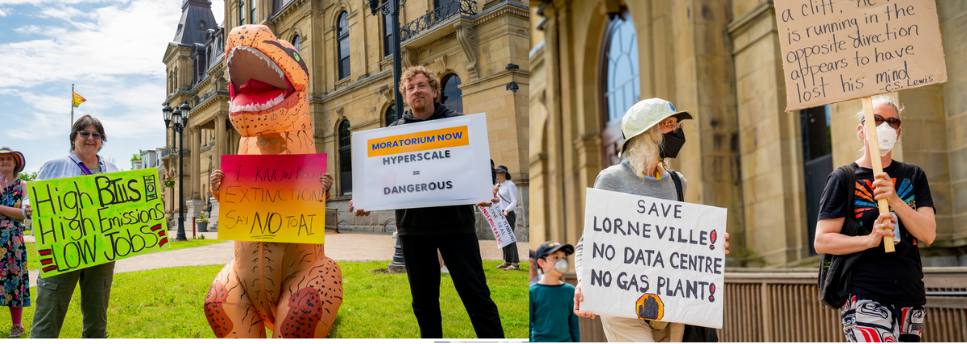
The push back in SJ has been substantial, led by the Save Lorneville group, who have hosted several rallies and information sessions. More recently, several community groups came together at the provincial legislature with over a hundred people from across the province. This coincided with the discussion in legislature of a resolution calling for a moratorium on data centres in the province. However, the Holt government quashed the resolution, denying a moratorium.
The fight continues.